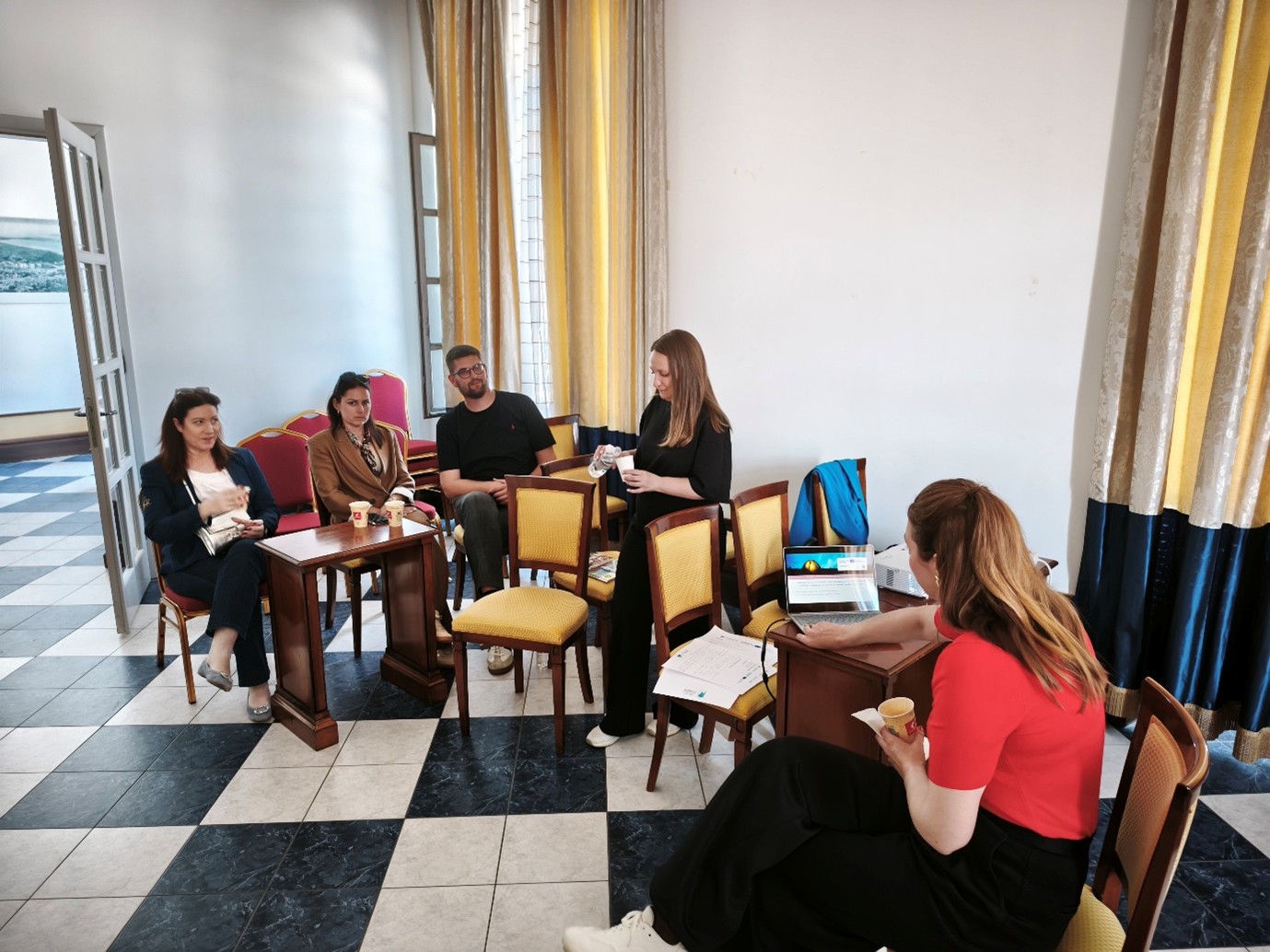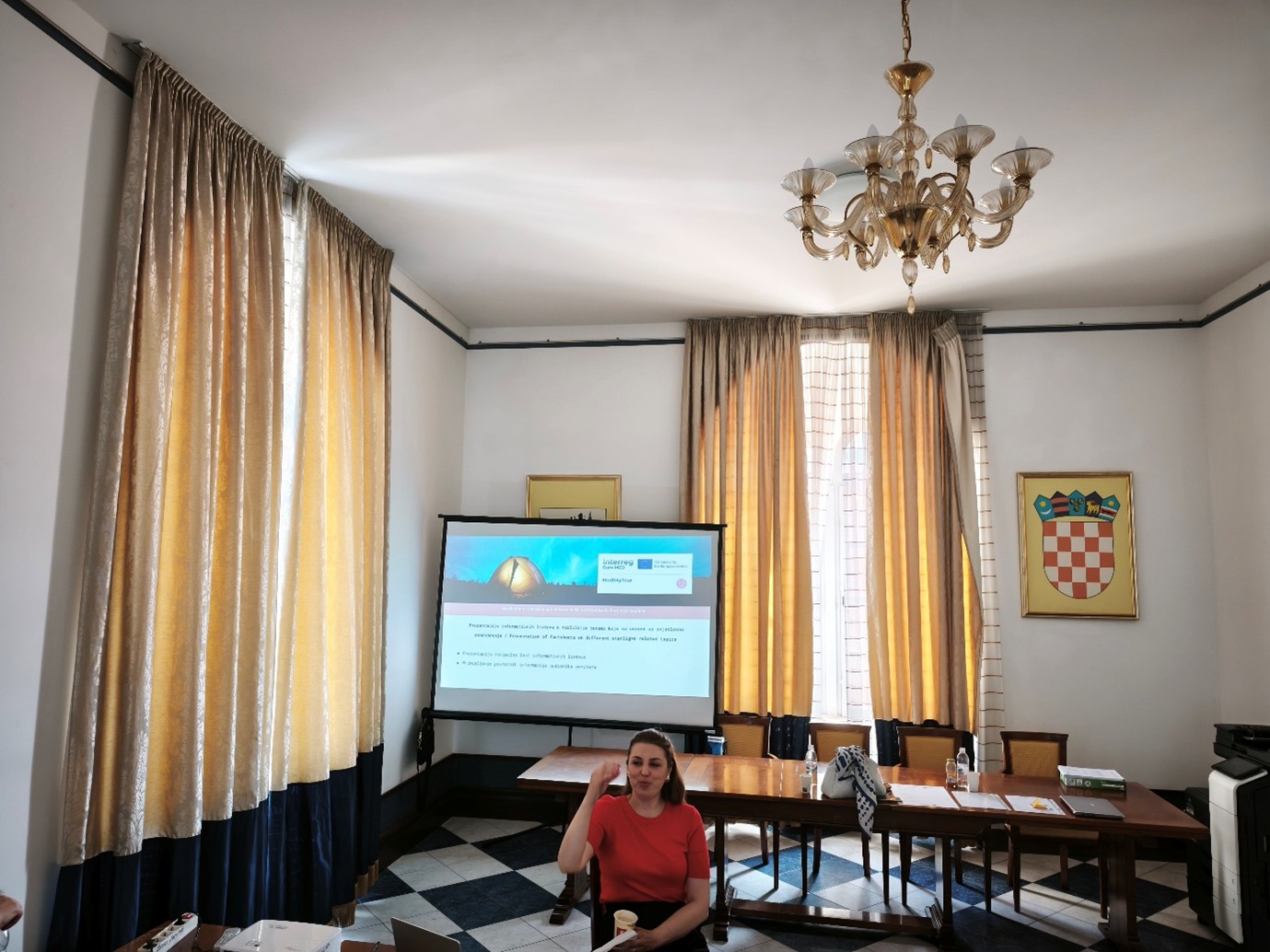

Following the HOW–NOW–WOW workshop and the formal establishment of the Astrotourism Place Lab, on the same day — 28 April 2026 — a Capacity Building Seminar was held at the Municipal Hall in Jelsa as part of the MedSkyTour project (Interreg Euro-MED). The seminar was led by Dr Katarina Miličević from the consulting firm Tourism Lab, and was attended by 18 stakeholders from local and regional government, the business sector, academia, and civil society.
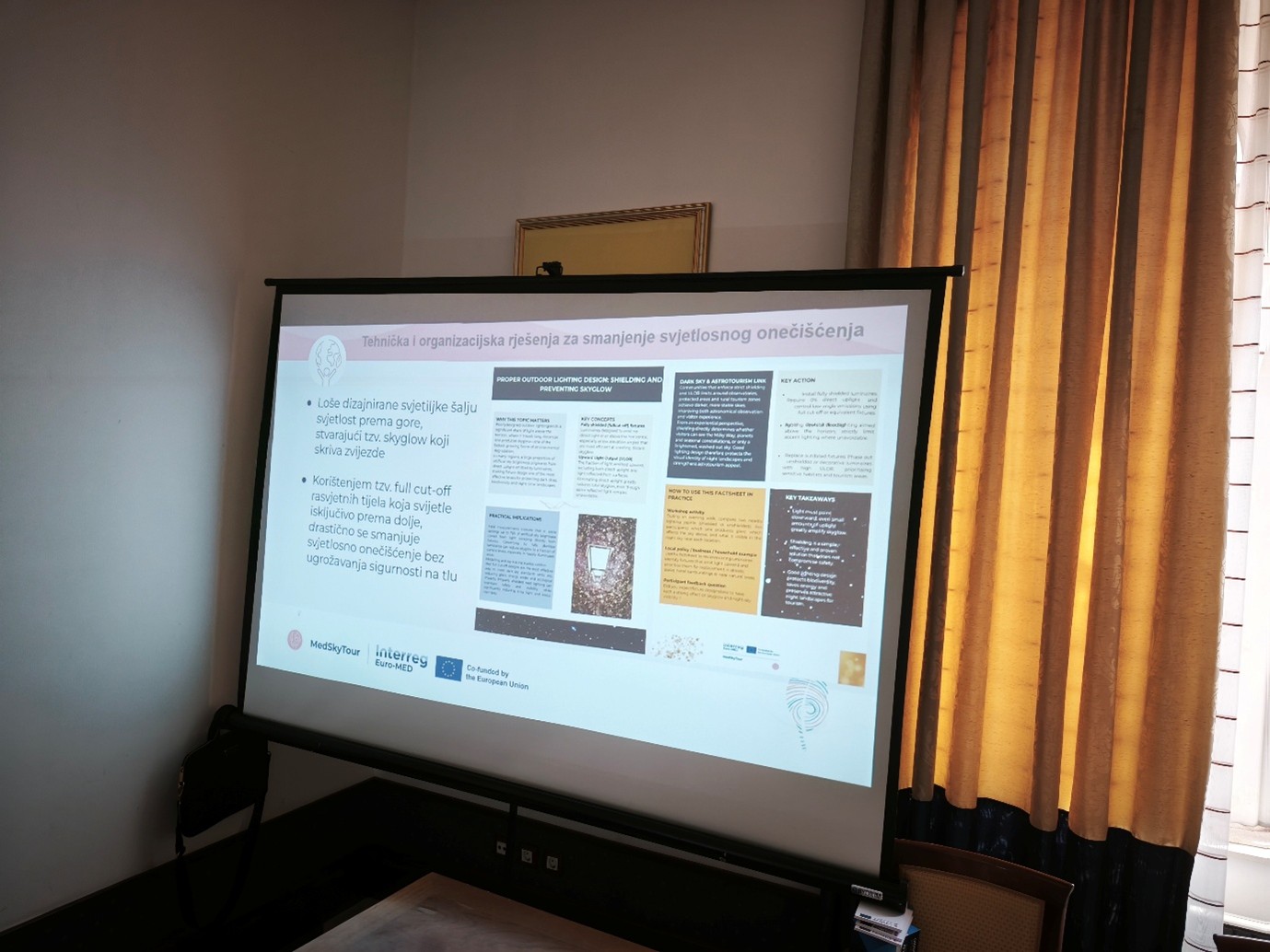
The aim of the seminar was to gather stakeholder feedback and raise awareness of the importance of stargazing-based tourism offerings in the Municipality of Jelsa as a pilot area within the MedSkyTour project. During a one-hour presentation, participants were introduced to six information sheets on topics related to light pollution, developed within the project framework: technical and organisational solutions for reducing light pollution, identification of astronomical objects, nocturnal wildlife and biodiversity, the impact of light pollution on human health and biodiversity, the use of new technologies such as mobile stargazing applications, and the impact on the health of vulnerable groups.
Following the presentation, stakeholders completed a questionnaire consisting of 12 questions designed to assess attitudes and levels of knowledge regarding light pollution, ecological dependencies, technical solutions, and the potential of astrotourism. The results revealed a high level of awareness, but also the presence of certain misconceptions that the seminar successfully addressed.
As many as 88.9% of participants already perceived natural darkness as a resource worth preserving. At the same time, 55.6% of respondents had not expected the design of lighting fixtures to have such a significant impact on light pollution, 72.2% had held the incorrect assumption that warm light is always an ecologically safe option, and 61.1% believed that simply switching to LED lighting automatically ensures ecological sustainability. The most commonly observed type of light pollution was excessive exposure to artificial light from sources such as billboards, decorative lighting, and street lamps, noted by 72.2% of respondents.
The results also demonstrated an exceptionally high level of civic readiness for change: 100% of participants stated they would actively support modifications to public lighting if the concrete benefits for the local community were clearly presented to them. Nearly all respondents — 94.4% — believe that digital stargazing tools would positively change their relationship with the night sky. The development potential of Jelsa’s night sky was unanimously confirmed: all stakeholders believe the night sky holds real potential for destination development, and 94.4% would be willing to travel to experience an eclipse or a meteor shower.
The seminar concluded with a session on the process of creating new tourism services in the context of astrotourism, followed by a closing discussion. The questionnaire results and seminar conclusions will be integrated into the MedSkyTour project deliverables and will serve as a foundation for the further development of astrotourism offerings in the Jelsa destination.
The Municipality of Jelsa participates in the MedSkyTour project as an associated partner of the Public Institution RERA S.D. and as the pilot area in Croatia. The project brings together partners from seven countries with the aim of developing sustainable tourism based on stargazing and implementing measures to reduce light pollution at selected locations in Croatia, Montenegro, Greece, Italy, Portugal, Slovenia, and Spain.